


The modern pace of life often does not allow us to pay attention to minor ailments: increased fatigue, dizziness, joint and intestinal pain.We often associate ailments with overwork, lack of sleep, stress and anxiety.But few people think these diseases may be caused by worms, which can live in our bodies for long periods of time, causing many of the symptoms we usually think of as signs of other illnesses.Symptoms of worms in adults or children depend on many factors, but regardless, the presence of parasites in our bodies can cause discomfort and disgust, so it is important to identify the parasites as quickly as possible and remove them with appropriate treatment.
What is a worm infection?
Human helminths, or "helminth infections" in the medical terminology, are a large group of diseases caused by parasites that invade the human body.According to medical indicators, about 80% of the population is found to be infected with worms, but not everyone knows this.Generally, human parasites can be found in the human intestines or internal organs and tissues.Worms are retained in the human body through special organs: suckers, hooks and spines.They feed on nutrients in tissue juices or blood.
During their life, worms produce toxic substances that are absorbed into the blood, lymph, and then spread throughout the body, penetrating internal organs and systems, disrupting their functions.Modern medicine knows that there are more than 100 kinds of worms that parasitize the human body.Some of them do not cause much harm, while others cause considerable harm to human health and life.It is important to remember that after entering the human body, worms use our "resources" to perform their important functions, causing a lot of damage to the functioning of the entire organism.
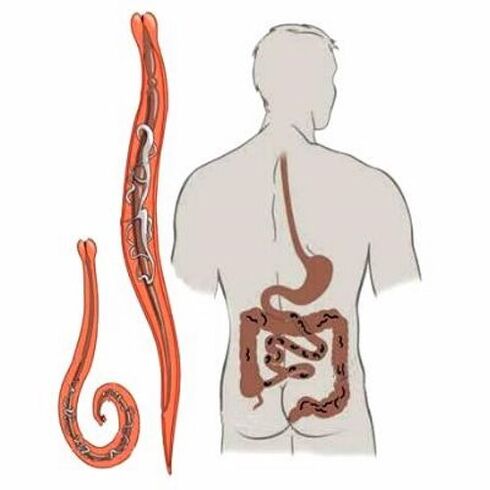
In the initial stages, symptoms of worms are vague or completely absent.In this case, detecting parasites is quite difficult and is possible only if a person pays attention to his own health, notices the slightest irregularities and takes steps to eliminate them.
Types of worms that live in the human body
Over the years of evolution, worms have learned how to adapt well to the human environment.In parasitology, human worms are divided into two categories:
- Tissue worms - parasitic on human tissues or internal organs: cysticercosis, paragonimiasis, hydatid disease, filariasis, etc., which can affect the human brain, liver, lungs, joints, etc.
- Coelworms - Live in the small or large intestine: tapeworms, hookworms, roundworms, pinworms, whipworms.
Worms do not have the ability to reproduce in the human body.Some parasites live for a few weeks (pinworms), but some individuals can live for years (roundworms, tapeworms) and can be quite large.The lifespan of cavitary worms is often extended by reinfection.Symptoms of worms in adults or children directly depend on the number, type of worms present in the body, overall health, and other characteristics of the body.
How does worm infection occur?
You can get worms in a number of ways:
- Through soil: Eating unwashed vegetables and fruits and lack of personal hygiene when in contact with soil.
- Swim in the reservoir.
- Domestic or street animals (cats, dogs) are common carriers of the parasite.Infection can occur while playing with pets or through soil or sand.
- Via food - animal meat without the necessary heat treatment - is the main source of histitis infection.In addition to meat products, worms are also found in dairy products, fish, and canned foods.
- Failure to observe personal hygiene rules is the main cause of parasite infection in children, who often put their dirty hands in their mouths and rub their eyes with them when playing or walking in the street.

Worm infection can occur another way.Once a parasitic disease has been diagnosed, determining the source of infection is difficult to almost impossible.
first signs of worm infection
Once the parasite enters the body, it encounters obstacles from the immune system, which recognizes it as a foreign pathogen.If the immune system is strong, there is a good chance that the worms will not penetrate the body or be eliminated quickly.When a person's immunity is low, he or she cannot resist parasites from invading the intestines, developing, and becoming adults.After a while, when the parasites turn into adults, they begin to secrete large amounts of toxins that poison the human body.The worm's waste products penetrate the blood and spread throughout the body, causing initial symptoms such as:
- periodic headaches;
- increased fatigue;
- increased or decreased appetite;
- nausea;
- stomach ache;
- constipation or diarrhea;
- Anal itching;
- sleep disorders;
- increased sensitivity to allergens;
- Increased irritability.

Symptoms of helminth infection in adults or children can negatively affect the status of the immune system; rashes caused by helminths are also noted, which are often confused with dermatitis.Almost always, when the above symptoms appear, a person does not even suspect the presence of a parasitic disease, but begins to be examined by doctors from other fields of medicine, who, after the results of the examination, do not find any obvious abnormalities and refer or recommend helminth testing.
Symptoms of human worms
Worm symptoms in adults or children depend directly on the type of parasite, its location and the intensity of the infection.For example, after a roundworm infection, symptoms appear on days 2-4.The clinic is always wiped out and accompanied by general discomfort.In other cases, when a parasitic infection occurs, the first signs may appear after 2 - 3 weeks, and if a person is infected with filariasis, the incubation period can last up to 18 months.Let's consider the main symptoms of parasitic diseases, as well as the signs of helminth infection caused by certain worms (as mentioned above):
- Pinworms or pinworms - causes itching of the anal canal, worsened at night, and grinding of teeth during sleep.
- Trichocephalosis, trichomoniasis, and schistosomiasis can lead to vitamin deficiencies and anemia and lead to dysbiosis.
- Roundworm - body temperature rises to 37.5 degrees, dry cough with phlegm.Laboratory tests revealed an increased number of eosinophils and an allergic rash.If the infection is severe, bronchitis may develop, along with suffocation and pneumonia.In addition, gastrointestinal disorders and rapid and significant weight loss may occur.
- Trichinellosis - causes muscle pain, fever, and swelling of the eyelids and limbs.
- Fascioliasis, giardiasis, opiodiasis - affects the liver, causing symptoms of jaundice.Splenomegaly, neurological disease, and gastrointestinal disease are present.
- Genitourinary schistosomiasis - causes diuretic disorder characterized by the release of blood during urination.

In addition to the possible symptoms of worm infection mentioned above, there are also life-threatening symptoms in humans, affecting the brain, central nervous system, eyes, joints, and other organs.It is important not to look for other diseases, but to have a complete examination of the body, checking for any worm infections.Only in this way can the parasite be identified, and all treatments are aimed at eliminating it and restoring the function of the internal organs.
Worms are so dangerous
Worms in children - Symptoms often lead to loss of appetite, as well as the development of allergic reactions or bronchitis.In advanced stages, bronchial asthma, pneumonia, and other serious illnesses may occur.Severe parasitic diseases often lead to intestinal obstruction and neurological disorders.Worms significantly reduce immunity, leaving the body defenseless against other infectious or non-infectious diseases.In more severe cases, worms can cause brain damage or even death in humans.
Worm infection test
Perhaps, each of us is concerned about this question: Do I have a worm infection?We offer you a simple test and then count the number of positive answers to the following symptoms, which are the most typical features of parasitic diseases:
- Do you feel itchy in your anus?
- Do you have a rash?
- Do you often have headaches?
- Do you often feel sick?
- Do you often worry about bowel movements: bloating, gas, constipation, diarrhea?
- Is your sleep restful and restful?
- Do you notice puffiness in your legs, body, or under your eyes in the morning?
- Do you suffer from bronchial asthma?
- Have you noticed swollen lymph nodes?
- Do you often feel bitter in your mouth?
- Do you tire easily?
- Have you ever experienced a slight, unexplained increase in your body temperature?
- Does your skin have a yellowish tinge?
- Do you snore or grind your teeth while sleeping?
- Are you losing weight because you have a good appetite?
You need to answer: yes or no.If you answered 8 yes, you are at risk for worm infection.If there are more than 12 positive answers, you are likely to have a parasitic disease.In this case, you need to consult an infectious disease specialist or parasitologist as soon as possible, perform a stool test for eggs, and perform a general blood test.Test results will help confirm or refute worm infection.

Treatments for worm infections
Currently, there are many ways to treat worms in children or adults.The choice of treatment depends on the treating physician, the type of worm, the patient's age and other factors.The process of deworming is currently called deworming and involves taking special medications that must be prescribed by a doctor on a case-by-case basis.Worms - Symptoms and treatment depend on many factors that the treating physician must consider.It is important to remember that you cannot treat worms independently, which at best will not bring results and at worst will lead to complications, since all drugs for treating worms have a large number of contraindications and side effects.